Second Hand Yamaha Piano In London From Independent Specialists
If you are searching for a second-hand Yamaha piano, you are likely looking for an instrument that combines quality, reliability and long term value.Yamaha has built a global reputation for consistency and durability. However, when purchasing a Yamaha piano second-hand instrument, the preparation and expertise behind the sale are just as important as the brand itself.
At Little and Lampert in Northwood, Middlesex, we specialise in carefully selected Yamaha pianos that are professionally assessed, regulated and prepared by fully qualified piano technicians. With over 60 years of combined experience in the piano trade, we offer independent, impartial advice based on technical knowledge rather than sales targets.
Established in our current premises since 1992 and supplying pianos to the trade since 1995, our reputation is built on long term trust and technical expertise.
Why Choose a Second-hand Yamaha Piano
Yamaha pianos are widely respected in homes, schools and professional studios across the world. Their consistent build quality makes them particularly suitable for the second-hand market.
A second-hand Yamaha piano offers:
Reliable structural integrity
Consistent action design
Stable tuning performance
Strong resale value
Balanced tonal character
For many families, teachers and serious students, Yamaha upright models such as the U1 and U3 represent an ideal balance between performance and practicality.
rand models provide additional projection and tonal depth, yet remain predictable and controllable.
Choosing a Yamaha piano second-hand instrument allows you to access these qualities at a significantly lower investment than purchasing new.
There is an important distinction between a used instrument and a properly prepared instrument.
A privately sold piano may appear attractive online. Photographs rarely reveal mechanical wear, uneven regulation or tonal imbalance.
When you buy Yamaha piano instruments from a specialist restorer, the preparation process ensures that:
Action components are regulated precisely
Key alignment is corrected
Hammer wear is assessed and addressed
Pedal systems function smoothly
Tone is balanced across the keyboard
This level of preparation requires technical training and experience. As fully qualified piano technicians, we approach each second-hand Yamaha piano as both musicians and engineers.
Our aim is not simply to sell the piano. Our aim is to ensure that it performs consistently and reliably for many years.
Our Technical Assessment Process
Every second-hand Yamaha piano entering our workshop undergoes detailed evaluation.
We assess:
Soundboard condition
Bridge integrity
Pinblock stability
String condition
Action wear
Key bushings
Hammer alignment
Regulation accuracy
Where necessary, adjustments and restoration work are completed to bring the instrument to the highest possible standard within its class.
This technical preparation is one of the reasons customers travel to our Northwood showroom from across London and beyond.
Yamaha U1 For Sale And What Makes It So Popular
The Yamaha U1 is arguably one of the most recognised upright pianos ever produced.
When buyers search for a Yamaha U1 for sale, they are often looking for a model that combines compact size with impressive tonal clarity.
The U1 typically stands around 121 cm in height, offering sufficient string length and soundboard area to produce a rich, focused tone. It is particularly well suited to students progressing through graded examinations, as well as teachers who require a reliable instrument for daily use.
A second-hand Yamaha piano U1 model, when properly regulated, provides responsive touch and consistent repetition.
In our showroom, customers can compare different production years and preparation levels to understand subtle variations in tone and feel.
Yamaha U3 And Larger Upright Models
The Yamaha U3 is slightly taller than the U1, generally around 131 cm. This additional height allows for longer strings and greater tonal projection.
For more advanced players or larger rooms, a Yamaha U3 may provide enhanced depth and sustain.
When evaluating a Yamaha upright piano second-hand instrument, the choice between U1 and U3 often depends on room size, musical repertoire and personal preference.
Because we operate as independent specialists, we focus on suitability rather than persuasion. Our technical background enables us to explain differences clearly so that you can make an informed decision.
Second-hand Yamaha Grand Pianos
A second-hand Yamaha piano in grand form offers a different playing experience altogether.
The horizontal string arrangement of a grand piano allows for more nuanced control of tone and repetition. Baby grands such as the GB series provide compact elegance, while larger models offer significant projection and dynamic range.
Grand pianos require careful assessment of action geometry and structural condition. As qualified technicians, we examine these factors in detail before presenting any instrument in our showroom.
Customers from Watford, Rickmansworth, Harrow and across NW London often visit specifically to compare upright and grand Yamaha options side by side.
Location And Accessibility
Our showroom is located in Northwood, Middlesex, just inside the M25 at Junction 17.
This convenient position makes us accessible from:
Watford
Rickmansworth
Harrow
NW London
The wider South East
Although we are based in London, we supply pianos throughout the UK. Customers travel knowing that every second-hand Yamaha piano in our showroom has been carefully selected and prepared.
Independent Advice And Impartial Guidance
As an independent piano shop, we are not bound by manufacturer sales quotas for new instruments. Our advice is based on what is genuinely appropriate for you.
With over 60 years of combined experience, James Little and Paul Lampert understand the long term performance characteristics of Yamaha models across different production periods.
When you buy Yamaha piano instruments from us, you benefit from direct access to qualified technicians rather than sales intermediaries.
What To Consider Before Purchasing
Selecting a second-hand Yamaha piano involves several considerations.
Room acoustics influence perceived tone. Larger rooms may benefit from the additional projection of a U3 or grand model. Smaller rooms may suit a U1 perfectly.
Player level is also important. Beginners require a stable, forgiving action. Advanced players may seek greater tonal variation and dynamic control.
Budget should reflect long term value rather than short term price alone. A properly prepared Yamaha piano second-hand instrument can serve reliably for decades.
Guarantee and Peace Of Mind
Every piano we sell includes a 5 year guarantee.
In addition, we offer a full money back guarantee if not completely satisfied.
This level of reassurance is rarely available through private listings. It reflects our confidence in the preparation standards we maintain.
Serving Customers Across The UK
Although many customers visit our Northwood showroom in person, we regularly supply instruments throughout the UK.
We discuss preparation details transparently and arrange delivery with care. Our aim is long term satisfaction, not a one time transaction.
Second-hand Yamaha Piano As A Long Term Investment
Yamaha pianos retain strong demand in both private and educational sectors.
A carefully prepared second-hand Yamaha piano can represent a sensible investment due to:
Brand recognition
Durable construction
Stable tuning characteristics
Continued market demand
Teachers often recommend Yamaha instruments for examination preparation because of their consistent touch and tone.
Visit Our Northwood Showroom
If you are looking for a second-hand Yamaha piano in London, we welcome you to visit our showroom in Northwood.
Compare models. Experience tonal differences. Discuss your requirements with qualified technicians who have spent decades in the piano trade.
With our 5 year guarantee and satisfaction promise, you can choose with confidence.
Understanding Yamaha Engineering And Why It Matters In The Second-hand Market
Yamaha began manufacturing pianos in Japan in the late 19th century and has since become one of the most consistent large scale piano manufacturers in the world.
One reason a second-hand Yamaha piano remains desirable decades after production is the precision of its manufacturing systems. Yamaha developed highly controlled production processes that standardised action geometry, string scaling and structural design.
For buyers, this consistency means that a Yamaha piano second-hand instrument is far more predictable than many other brands of similar age.
Consistency does not remove the need for technical preparation. It does, however, provide a stable foundation for restoration and regulation.
This is one of the reasons Yamaha uprights dominate music schools, examination centres and teaching studios throughout the UK.
U1 Versus U3 In Detail
Many customers searching for a Yamaha U1 for sale ask how it compares technically to a U3.
The U1 typically stands at approximately 121 cm in height. This provides sufficient string length for a balanced tone suitable for most domestic environments.
The U3, at approximately 131 cm, offers longer strings and greater soundboard area. This translates into:
Increased bass depth
Enhanced projection
Greater tonal sustain
Wider dynamic range
For intermediate and advanced players, the U3 may provide additional tonal flexibility. For smaller rooms or modest budgets, the U1 often represents excellent value.
When evaluating a Yamaha upright piano second-hand instrument, cabinet height is only one factor. Regulation quality and hammer condition can significantly affect performance.
This is why visiting a specialist showroom in Northwood allows meaningful comparison rather than relying on specification alone.
Understanding Japanese Domestic Market Yamaha Pianos
Many second-hand Yamaha piano instruments available in the UK originate from the Japanese domestic market.
In Japan, pianos are often kept in controlled environments and used regularly. This can result in instruments that are structurally sound even after many years.
However, environmental transition must be managed carefully. Changes in humidity and temperature can affect tuning stability and regulation.
As experienced technicians, we assess each instrument thoroughly before offering it for sale. Preparation ensures that the piano adapts successfully to UK conditions.
This transparency is important. Buyers should understand origin and preparation rather than rely on marketing language alone.
What To Inspect When Buying A Second-hand Yamaha Piano
If you are considering purchasing privately, there are several technical areas to examine.
Action wear can lead to uneven repetition. Key bushings may loosen. Hammer grooves can affect tone. Strings may show corrosion.
Pinblock stability is essential for tuning reliability. Soundboard cracks should be assessed carefully. Pedal mechanisms must operate smoothly.
Without technical training, many of these elements are difficult to evaluate.
When customers buy Yamaha piano instruments from us, they benefit from professional inspection and preparation rather than guesswork.
How Long Will a Second-hand Yamaha Piano Last
A well maintained Yamaha upright or grand can perform reliably for several decades.
Longevity depends on:
Usage intensity
Environmental conditions
Maintenance history
Preparation quality
A properly restored Yamaha piano second-hand instrument can provide long term musical satisfaction in both domestic and educational settings.
Resale Value And Market Demand
Yamaha maintains strong brand recognition. This contributes to stable resale value compared with lesser known brands.
A second-hand Yamaha piano purchased from a reputable specialist is more likely to retain market appeal.
For families considering future progression, this can provide reassurance that the instrument remains a sensible investment.
Maintenance After Purchase
Once installed in your home, regular tuning is essential. Most domestic pianos benefit from tuning at least once per year.
Humidity control also plays an important role. Stable environmental conditions support tuning stability and mechanical consistency.
We are happy to advise customers on ongoing care to ensure their Yamaha piano second-hand instrument continues to perform optimally.
Frequently Asked Questions About Second-hand Yamaha Pianos
Is a second-hand Yamaha piano better than a new budget piano?
In many cases, yes. A high quality Yamaha upright built to professional standards may outperform a new entry level instrument from a lesser known manufacturer.
Is the Yamaha U1 suitable for advanced players?
The U1 is suitable for serious study and examination work. Advanced players with larger rooms may prefer the U3 for additional projection.
How old should a second-hand Yamaha piano be?
Age alone is not decisive. Condition, preparation and maintenance history are more important than production year.
Can I visit the showroom before deciding?
Yes. We encourage customers to visit our Northwood showroom and compare models in person.
Do you deliver outside London?
Yes. We supply pianos throughout the UK.
Why Choose Little And Lampert In Northwood
Established since 1992 in our current premises and supplying the trade since 1995, we have built our reputation through consistency and technical expertise.
With over 60 years of combined experience, James Little and Paul Lampert provide independent, impartial advice based on professional training.
Every second-hand Yamaha piano in our showroom reflects careful selection and preparation.
We combine:
Technical qualification
Long term industry experience
5 year guarantee
Full money back guarantee
For customers searching for a second-hand Yamaha piano in London or across the UK, this combination offers reassurance that private listings cannot match.
Visit our Northwood showroom inside the M25 at Junction 17 and experience the difference that professional preparation makes.
Contact us to arrange a visit or enquire about current availability.
Comparing Yamaha Upright Models In Greater Detail
When researching a second-hand Yamaha piano, many buyers assume that all uprights feel similar. In reality, small differences in height, scale design and preparation can noticeably affect performance.
Yamaha U1
Approximate height 121 cm
Clear, focused tone
Balanced bass response
Suitable for domestic rooms
Highly popular in schools
Yamaha U3
Approximate height 131 cm
Longer strings
Increased bass depth
Greater projection
Preferred by more advanced players
Other Yamaha upright models may vary slightly in cabinet design or production era. What matters most is how the individual instrument has been prepared.
A Yamaha upright piano second-hand instrument that has been carefully regulated will feel more precise than a poorly maintained taller model.
In our Northwood showroom, customers are able to play different examples and compare tonal colour and action weight directly. This practical comparison is far more revealing than reading specifications online.
Understanding Tone and Touch In A Second-hand Yamaha Piano
Two words frequently used when describing Yamaha instruments are clarity and consistency.
Clarity refers to the clean separation of notes, particularly in fast passages. Consistency refers to even response across the keyboard.
However, tone is not identical in every instrument. Production year, environment and preparation influence the final character.
When assessing a Yamaha piano second-hand instrument, we listen for:
Evenness of tone from bass to treble
Controlled sustain
Balanced dynamic range
Responsive repetition
Touch is equally important. Regulation affects how quickly keys return and how evenly hammers strike strings.
A properly prepared second-hand Yamaha piano should feel stable under the fingers and predictable at different dynamic levels.
Grand Pianos Versus Upright Pianos In Domestic Settings
Some buyers are uncertain whether to choose an upright or a grand.
A grand piano offers:
Horizontal string alignment
More direct repetition mechanism
Greater tonal complexity
Enhanced projection
An upright piano offers:
Compact footprint
Lower overall cost
Excellent suitability for family homes
Reduced spatial requirements
For many domestic settings in London and the South East, a Yamaha upright piano second-hand instrument provides ideal balance between performance and practicality.
In larger rooms, a Yamaha grand piano may unlock additional tonal potential.
We discuss these considerations openly so that each customer selects the instrument most appropriate for their environment.
Environmental Considerations In The UK
Humidity and temperature variation can influence tuning stability and mechanical consistency.
When a second-hand Yamaha piano arrives in the UK from Japan or another region, careful acclimatisation is important.
Our preparation process accounts for environmental adjustment to ensure long term reliability.
We also advise customers on:
Ideal room placement
Avoiding direct sunlight
Maintaining stable humidity
Scheduling regular tuning
This ongoing guidance helps protect your investment.
Common Misconceptions About Second-hand Yamaha Pianos
There are several myths surrounding used instruments.
Myth 1
Older always means inferior.
Reality
Condition and preparation matter more than age.
Myth 2
All Yamaha uprights feel identical.
Reality
Individual instruments vary and require assessment.
Myth 3
Private purchase saves money.
Reality
Hidden repair costs can exceed initial savings.
When buyers choose a second-hand Yamaha piano from qualified technicians, they reduce uncertainty significantly.
A Detailed Buyer Checklist
If you are evaluating options, consider the following structured approach.
Define your budget clearly.
Measure available space carefully.
Identify primary user level.
Compare U1 and U3 models if considering uprights.
Test repetition speed and dynamic control.
Ask about guarantee and aftercare.
Confirm delivery arrangements.
This structured method prevents impulse decisions and supports long term satisfaction.
Why Our 5 Year Guarantee Matters
A 5 year guarantee is not merely a marketing statement. It reflects confidence in preparation standards.
When we sell a second-hand Yamaha piano, we stand behind the instrument technically.
In addition, our full money back guarantee provides reassurance that is rarely available through private listings.
Customers from Northwood, Watford, Rickmansworth, Harrow and across NW London often remark that this level of reassurance influenced their decision to purchase.
For many buyers, this visit clarifies the decision more effectively than weeks of online research.
Long Term Ownership Experience
A second-hand Yamaha piano should not be viewed as a short term purchase.
With regular maintenance and appropriate environmental care, it can remain part of your home for decades.
Many families purchase a Yamaha upright for examination work and retain it long after formal study ends.
This continuity reflects both build quality and brand reputation.
Serving London And Beyond
Our location inside the M25 at Junction 17 makes our Northwood showroom easily accessible from across Greater London.
However, we regularly supply customers throughout the UK.
When buyers search online for a second-hand Yamaha piano, they are often comparing options nationally. Our reputation and guarantees encourage customers to travel or arrange delivery with confidence.
Final Considerations Before You Buy
If you are currently comparing listings, ask yourself:
Has the piano been inspected by qualified technicians?
Is a meaningful guarantee included?
Can you test multiple models side by side?
Is the seller independent and impartial?
These questions often distinguish a specialist showroom from a general reseller.
When you buy Yamaha piano instruments from Little and Lampert, you benefit from:
60 years combined experience
Independent advice
Technical qualification
Established reputation
5 year guarantee
Full satisfaction promise
For buyers seeking a second-hand Yamaha piano in London or across the UK, this level of expertise provides long term reassurance.
Why A White Piano Is The Perfect Choice For Modern Homes
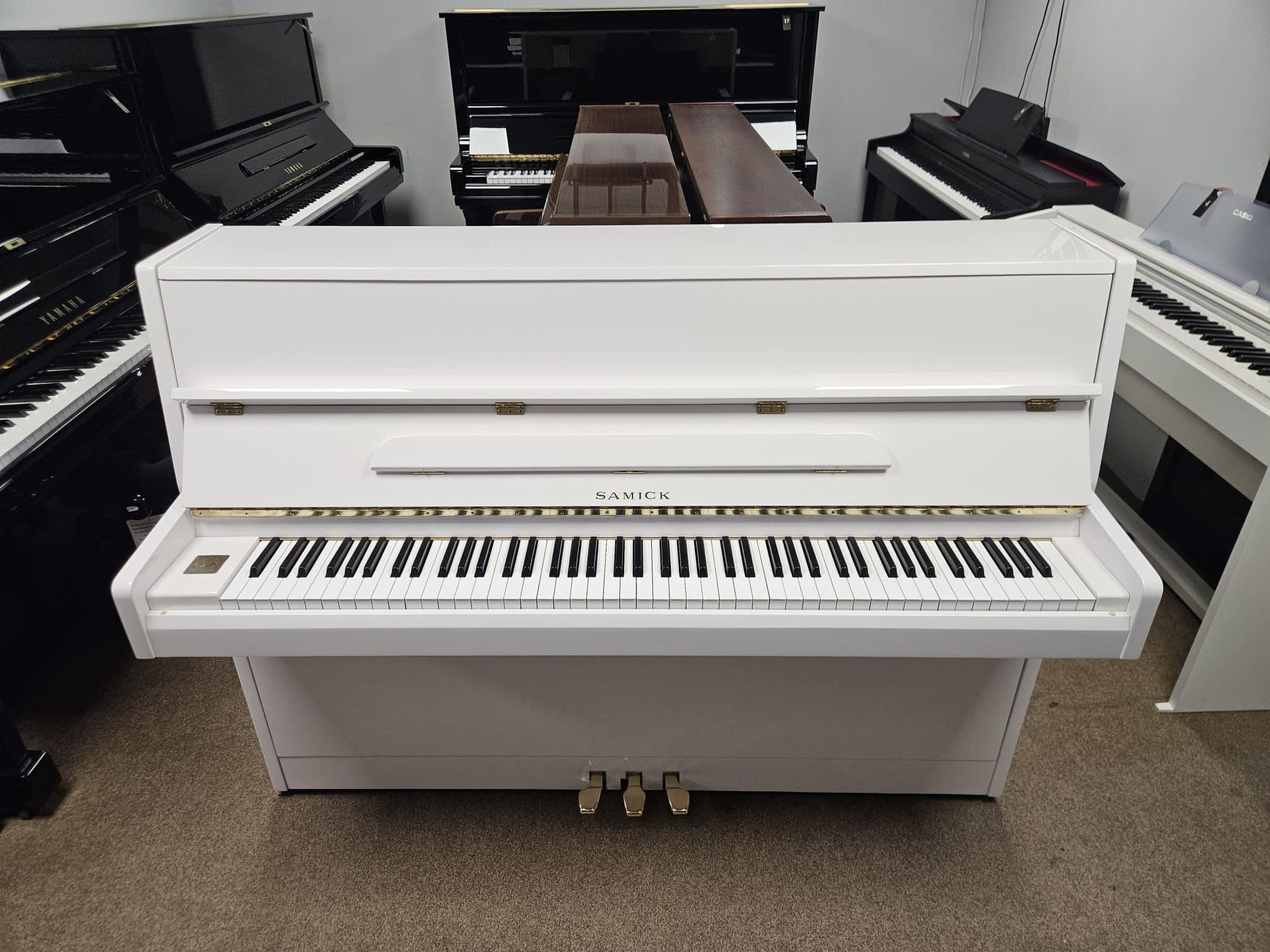
The piano is more than an instrument. It becomes the centre of a room where people gather, play, and make memories. Black uprights remain popular, yet more buyers now look for a white piano that brings light and clarity to a space. A piano in white finish offers modern style with the full character of an acoustic upright.
Search interest keeps rising because white pianos blend easily with contemporary interiors. The colour softens the visual weight of the case and helps smaller rooms feel open. A balanced approach to design and sound makes this finish attractive to beginners, families, teachers, and performers.
Style Benefits Of A White Piano
A white piano adds elegance without dominating a space. Gloss surfaces reflect daylight and create a calm focal point in open plan homes. Many owners choose this look for minimalist or Scandinavian inspired décor where lighter tones work best.
Practical Benefits Of Polyester
It is not only about appearance. High gloss polyester is durable and simple to clean. Everyday marks wipe away with ease, which makes the finish ideal for family homes and teaching studios. A piano in a white finish can be both beautiful and practical for daily practice.
Choosing A White Piano For Your Home
Think first about the space. Measure the wall where the instrument will sit and consider light, heating, and foot traffic. A white piano suits bright living areas because the case reflects natural light and keeps the room feeling open. Placement away from radiators and direct sun helps preserve tuning stability and the look of the finish.
Upright Or Grand
Grands look dramatic, yet many homes do not have the floor space. Uprights provide excellent value and fit more easily. A compact upright in piano white finish delivers style with a footprint that works in living rooms, studies, and teaching rooms.
Brand Matters With A White Piano
Build quality shapes tone, touch, and long-term reliability. This is why many players choose respected makers. Our own Samik Upright Piano shows how a modern case in white can partner with a warm balanced sound. It proves that an elegant look and strong musical performance can go together.
Size And Sound
Taller uprights generally offer a deeper tone because of longer strings and a larger soundboard. Smaller models can still deliver excellent clarity and are easier to place. A well-prepared piano will suit classical pieces, jazz standards, and popular songs with equal ease.
Interior Design Tips
Work with the natural light in the room. A white piano near a window can brighten a space without feeling heavy. Neutral rugs and soft furnishings keep attention on the instrument. A simple lamp on a nearby table supports evening practice without glare on the keys.
Caring For A White Piano Finish
Keep a soft cloth nearby for gentle dusting. Use only approved cleaners for polyester and avoid abrasive pads. Close the lid after playing to protect the keys from sunlight. Small habits like these keep a white piano looking fresh for years.
Why Interest Keeps Growing
Families enjoy an instrument that looks as good as it sounds. Teachers welcome a brighter studio that feels inviting to students. Performers appreciate the stage presence of a piano white case under lights. Articles on music and design often highlight this finish as a smart choice for modern homes. For background on why the piano remains so popular, see Classic FM piano facts.
Learn More About Uprights
If you are new to uprights and would like historical context, Yamaha history of upright pianos explains how designs evolved and why uprights suit domestic rooms so well.
See A White Upright In Stock
If you are considering a white piano for your home, view the Samik Upright Piano in high gloss white polyester. The model offers a compact footprint, a responsive action, and a balanced tone that suits daily practice and performance.
Conclusion
White pianos combine contemporary style with the rich character of a traditional acoustic instrument. It brightens a room, matches modern décor, and encourages regular playing. Choose the right size, place it with care, and look after the finish. You will gain a beautiful centrepiece that sounds inspiring and looks timeless.
Have you just asked AI about piano tuning near me and found mixed answers? Many players want to know the real piano tuning cost. People often type questions like how much does it cost to tune a piano or how much does piano tuning cost in the UK. This guide gives clear answers. You will see typical prices, the factors that affect them, and how to find a trusted local tuner such as LL Pianos.Little and Lampert offer a comprehensive piano tuning and regulation service carried out by highly qualified and experienced technicians. The team covers an area within a twenty mile radius of the shop in Northwood near Harrow in Middlesex.The shop specialises in Yamaha upright pianos. The team can tune all makes. Kawai. Kemble. Bechendorfer. Chappell. Bentley. Grand. Baby grand. Upright. Your instrument will receive careful professional attention to bring out the best in your playing.
Every piano purchased from Little and Lampert includes tuning in the package. If you are outside the local area the team will arrange a qualified tuner closer to you.
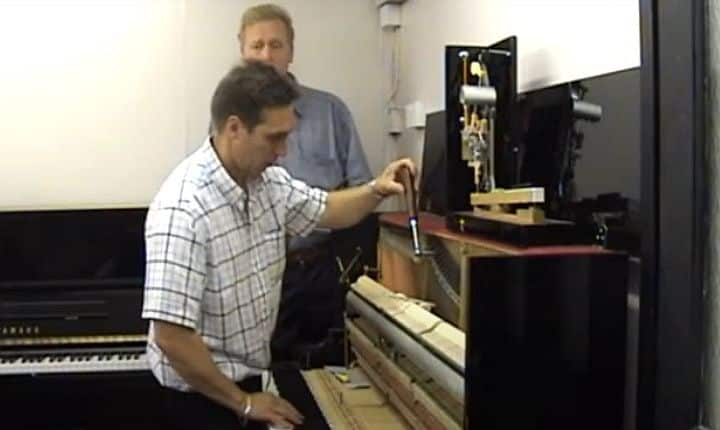
You can also watch the video with Paul and James that explains the importance of regular tuning.
Piano Tuning Near Me
Searching for piano tuning near me is usually the first step. Search results show names, maps, and review scores. A piano is a sensitive and valuable instrument. It deserves a technician with deep training and proven experience. That is why local reputation matters.
Training varies across technicians. Some trained through long apprenticeships. Others are new to the trade. It is hard to judge quality from a short listing. LL Pianos has a reputation built over decades. Families. Schools. Venues. Returning customers trust the service because results stay consistent.
A local tuner brings convenience and prompt response. If pitch drifts before an exam or a performance you can book a visit quickly. The twenty mile service radius keeps travel sensible while quality stays high. If you live further away the team will connect you with a trusted technician in your area. You do not need to gamble on an unknown name.
Piano Tuning Cost
The typical piano tuning cost in the UK sits between £90 and £120. Rates depend on location and on the condition of the instrument. LL Pianos keeps pricing simple.
Within seven miles of Northwood Hills: £95
Between eight and twenty miles of Northwood Hills: £100
These prices apply to upright and grand pianos. There are no hidden extras. Many people search for cost of piano tuning near me or cost to tune a piano near me. Location can change travel time. Most UK tuners still work within the same broad range.
What affects the price
Distance. Travel time can influence the rate.
Condition. A piano kept close to pitch is quicker to tune. A neglected piano may need a pitch raise.
Frequency of use. Teaching. Performance. Daily practice. Heavier use can need more attention.
Instrument type. Upright. Baby grand. Grand. Each needs a slightly different approach.
Examples help. A family upright that receives tuning twice a year usually fits the standard £95 or £100 service. A village hall grand left untuned for five years may need staged pitch work before fine tuning. Clear advice prevents surprises.
How Much Does It Cost to Tune a Piano
How much does it cost to tune a piano is one of the most common questions. A straightforward answer sits around £95 to £120. Detail matters.
A piano tuned every six months stays close to pitch. The technician can fine tune efficiently. The price remains in the standard bracket. A piano left untouched for several years presents a different case. Strings slip. Tension becomes uneven. The instrument can sit more than a semitone below concert pitch. In that case the technician often performs a pitch raise in stages. Two visits may be required. Time and care protect the instrument.
Intended use also matters. A family piano used for casual practice needs standard fine tuning. A recording session or a recital can require extended precision. Some venues request touch ups before rehearsal and again before the performance. Higher precision needs more time. The cost reflects that level of detail. LL Pianos gives clear quotes based on your piano, your location, and your needs.
How Much Does Piano Tuning Cost
People search this phrase in many forms. How much does piano tuning cost. How much to tune a piano UK. Piano tuning cost near me. The goal is certainty. You want to know the service is affordable and reliable before you book.
LL Pianos provides that certainty. The local rate within seven miles is £95. The rate within twenty miles is £100. Outside the radius the team will recommend a qualified tuner in your area. Clear prices build trust.
Tuning is not a one off expense. It preserves sound quality and protects value. A neglected instrument loses tone and resale potential. Regular appointments are a modest annual investment that prevents larger repair costs later. Clear pricing and clear reasons help every customer feel confident.
Why Piano Tuning Is Essential
An acoustic piano responds to its environment. Wood. Felt. Steel. These materials move with the seasons. Central heating dries the air in winter. Humidity rises in summer. The soundboard expands then contracts. String tension shifts. Pitch drifts. Regular tuning keeps the instrument at concert pitch and preserves musicality.
Sound quality depends on accurate relationships between notes. Clear harmonics. Balanced tone. Smooth transitions across registers. When pitch slips, chords turn muddy and octaves clash. Students lose confidence. Performers hear loss of brilliance. Regular tuning restores clarity and keeps practice enjoyable.
Tuning also supports longevity. A visit includes a quick health check. Early signs of trouble can be spotted before they become expensive. Loose pins. Buzzing strings. Action inconsistencies. Regular care avoids stress on the structure and protects the frame from sudden tension changes.
Upright and Grand Piano Tuning
Every piano is unique. Build quality. Room placement. Playing habits. All influence pitch stability. Uprights and grands share the same principles yet require different handling.
Upright pianos suit homes, schools, and small venues. Shorter strings can drift faster if the piano sits near heat sources or in rooms with variable humidity. A typical session lasts about an hour. Older uprights can have worn pins or ageing felts. A skilled technician compensates for these issues and brings stable results. Yamaha and Kawai uprights stay very steady with six month intervals. Makes such as Bechendorfer or Chappell may need a little extra attention. Each brand has its own character.
Grand pianos carry longer strings and a horizontal frame. The tone is rich and powerful. The work is intricate. Three strings per note across much of the keyboard must blend perfectly. Small inaccuracies stand out. Baby grands can drift quicker than concert grands. Owners often book more frequent visits during the first years. LL Pianos charges the same simple rate for uprights and grands. Time on site may differ. The standard of care stays the same.
What Happens During a Piano Tuning Visit
The appointment begins with a short conversation. History. Usage. Date of the last tuning. The technician listens to scales and chords to judge how far pitch has moved. A visual check follows for loose pins, buzzing strings, or action issues.
If the piano sits far from concert pitch the technician performs pitch correction. Strings must sit under even tension before fine work begins. A large drift can require a staged pitch raise. Slow steady changes protect strings from breakage and help the frame accept the load. The goal is stability.
Fine tuning follows. The technician uses a tuning hammer and felt strips and a trained ear. Each pair or trio of strings must lock together without beats. Some use an electronic reference. Final judgement always relies on the ear. A brief regulation check and small adjustments often finish the visit. Advice on placement and humidity helps the piano hold its pitch until the next session.
How Often Should You Tune a Piano
Twice a year suits most homes. This schedule balances pitch stability, sound quality, and cost. New pianos often need extra visits in the first year while strings settle. Studio and concert instruments may need attention before sessions or performances.
Environment shapes the plan. Rooms with strong heating or high humidity cause larger seasonal swings. Schools and churches benefit from regular schedules. Term dates. Exams. Services. Consistent tuning keeps the instrument ready and avoids last minute problems.
Talk to a professional about your situation. LL Pianos will suggest a schedule that fits your instrument and your usage. Clear guidance removes guesswork.
Professional vs DIY Piano Tuning
DIY kits and videos make tuning look simple. The reality is different. Piano tuning is a skilled craft that demands years of training. More than two hundred strings sit under very high tension. Precision matters at every step.
Risks are significant. A careless turn can snap a string. Replacement is costly. Sudden pulls can leave tension uneven. The result slips out of pitch within days. Forced adjustments can stress the frame or harm the soundboard. Repair costs can exceed many years of professional visits.
Professional service brings accuracy and stability. A technician listens for beat rates and balances the instrument as a whole. The visit often includes minor regulation checks and after care advice. In the long term this approach saves money and protects the instrument.
Regulation vs Tuning
Tuning adjusts string pitch. Regulation adjusts the action. Keys. Hammers. Pedals. Over time felts compress and parts shift. Keys can feel uneven. Hammers can strike inconsistently. Pedals can lose responsiveness.
LL Pianos checks for small regulation issues during each visit. Full regulation is less frequent. The effect can be dramatic. Many customers say the piano feels new again. Understanding the difference helps owners plan care that covers both sound and touch.
Special Situations: Schools, Churches, and Performance Venues
School pianos work hard. Practice rooms see daily use from many students. Without regular tuning these instruments slip quickly. Scheduled visits keep lessons productive and exam seasons calm.
Churches rely on stable instruments for weekly services and weddings. A piano that drifts can spoil an important moment. A simple plan of visits across the year prevents stress for musicians and organisers.
Performance venues require the highest standard. A concert grand needs attention before each recital. Some events need touch ups between rehearsal and show. LL Pianos provides flexible plans to fit rehearsal schedules and performance calendars.
FAQs About Piano Tuning
How long does a piano tuning take?
Most appointments last one to two hours. Timing depends on the condition of the instrument and how far pitch has moved.
Can an old piano still be tuned?
Yes. Most older instruments can return to stable pitch. Very neglected pianos may need staged work across more than one visit.
What if my piano has not been tuned for many years?
Expect a pitch raise before fine work. Gradual tension changes protect strings and the frame. The technician will explain the steps and the cost.
Is tuning included when buying a piano from LL Pianos?
Yes. Every piano purchased from Little and Lampert includes tuning. If you live outside the local area the team will arrange a qualified tuner near you.
Does moving a piano affect tuning?
Yes. Even a short move can disturb balance. Long distance moves almost always require tuning after the piano settles in its new room.
Can weather or humidity affect tuning?
Yes. Winter heating dries the air. Summer brings higher humidity. The soundboard moves with these changes and pitch shifts as a result.
What is the difference between tuning and servicing?
Tuning sets pitch. Servicing combines tuning with action regulation and sometimes voicing. Servicing is less frequent. The result is a piano that sounds and feels consistent.
How often should a beginner tune a piano?
Twice a year suits most beginners. Learning on a stable instrument protects the ear and keeps practice enjoyable.
Can I tune my piano myself?
DIY tuning is not advised. Risk of damage is high. Professional visits deliver accuracy, stability, and safety.
Do grands and uprights need different care?
Principles are the same. Grands often require longer appointments and greater precision. Uprights still benefit from the same regular schedule.
Book Your Piano Tuning
Ready to book your tuning? Call James on 01923 820 470. You can also send an email or use the contact form on the website. The team will confirm the correct rate for your location and arrange a convenient appointment. LL Pianos will keep your instrument sounding its best for home enjoyment, lessons, and performance.
Piano removal requires skill, planning, and care because a piano is never as simple as carrying a piece of furniture from one room to another. A piano is heavy, delicate, and valuable both financially and emotionally. Whether it is an upright piano passed down through generations or a grand piano that has pride of place in a concert hall, it deserves specialist care during every stage of its journey. At LL Pianos we undertake piano removals London customers rely on, as well as nationwide moves.
General house removal companies may offer to move your piano alongside the rest of your belongings. However, a piano is not just another box or sofa. Its weight is unevenly distributed, its internal mechanism is finely balanced, and even a small knock can cause damage that costs more than the removal itself. That is why using a company that focuses on piano removal makes such a difference.
At LL Pianos, we undertake piano removals throughout London, Middlesex, and across the UK. From simple local moves to complex nationwide transfers, our trained team handles each piano with precision and respect. We offer very reasonable rates, with prices starting from £220, and every piano removal is carefully planned to ensure your instrument arrives safely at its new location.
Even a small upright can weigh more than 200 kilograms, while a grand can exceed 400. Attempting a piano removal without the right equipment is risky for both the instrument and the people lifting it.
A piano removal is not like moving any other household item. A piano is both robust and fragile at the same time. Its frame is designed to withstand the enormous tension of its strings, yet its wooden case, keys, pedals, and internal mechanisms can be damaged if handled incorrectly. This combination of strength and delicacy is what makes piano removals a job for specialists rather than general movers.
The first and most obvious factor is weight. Even a small upright piano can weigh more than 200 kilograms, while a grand piano can easily exceed 400 kilograms. Attempting a piano removal without the right equipment or training is risky. Not only can it cause injury to those lifting it, but it can also result in scratches, broken legs, or damage to the soundboard if dropped or dragged.
Secondly, the shape of a piano presents unique challenges. Upright pianos are tall and narrow, often requiring careful manoeuvring through doorways or around staircases. Grand pianos, by contrast, must usually be dismantled before transportation. This means removing the legs, pedals, and lid, then protecting each part with padded coverings before securing them for safe travel. Reassembly at the destination is just as important, ensuring that the piano stands solidly and is ready to be tuned.
The Value of Your Piano
A piano may be worth thousands of pounds or carry priceless family memories. A mistake during a piano removal can damage both value and sentiment. Specialists reduce that risk dramatically.
Another consideration is value. Many pianos are cherished family possessions, carrying memories as well as monetary worth. Others are professional instruments used for teaching, performing, or recording. A mistake during a piano removal can cost not only money but also years of sentimental attachment or professional reliability. By using a company that specialises in piano removals, you reduce the risk dramatically. Every part of the process is handled by people who understand how pianos are built and how they should be protected.
Finally, there is peace of mind. A piano is not something that can be quickly replaced. Knowing that your instrument is in safe hands allows you to focus on the rest of your move without worry. At LL Pianos, we combine experience, proper equipment, and careful planning to deliver removals that are both safe and efficient. Our team treats every piano as if it were their own, giving you the reassurance that it will arrive in the same condition it left.
Piano Removals Near Me
Local Piano Removal Services
When people search for piano removals near me they are often looking for a company that can respond quickly and provide a local, trusted service. The truth is that most towns and cities do not have a specialist piano removal company on their doorstep. That is why we operate a service designed to cover the whole of the UK, while still giving customers the confidence of local care.
Covering London, Middlesex and the UK
Our team regularly travels throughout London, Middlesex, and the surrounding counties, but we also arrange removals to and from anywhere in the country. Whether you are moving a piano between rooms in the same house or sending it to the other end of the UK, we can provide the same level of service and attention. This approach means that no matter where you are searching from, you can rely on LL Pianos to appear when you type piano removals near me.
Planning Every Piano Removal
Specialist equipment and planning make the difference. When you book a removal, we ask about the type of piano, the access at your current address, and the details of the destination. This allows us to choose the right team size and the correct protective gear before we arrive. Even if you live in a flat with narrow staircases or a home with limited parking, we are able to plan ahead and move your instrument safely.
Flexible Scheduling and Peace of Mind
We also understand that time is important. Many customers contact us during a house move, when everything else needs to fall into place. That is why we offer flexible scheduling and efficient turnarounds. Our aim is to make sure the piano move does not add to the stress of the day. Instead, you can relax knowing that the heaviest and most precious item in your home is being handled by experts.
When you are searching for piano removals near me you want more than just someone with a van. You want the assurance that your piano will arrive in perfect condition, ready to be played and enjoyed in its new setting. With LL Pianos, that is exactly what you receive: a specialist service that feels local, wherever you are in the UK.
London presents unique challenges when it comes to moving a piano. Narrow terraced houses, high-rise flats, and busy streets all add extra layers of difficulty. For this reason, piano removals in London should always be carried out by people who understand both the instrument and the city itself.
At LL Pianos we have decades of experience moving upright and grand pianos throughout London and Middlesex. Our team is based in North West London, which allows us to cover areas such as Harrow, Wembley, Ealing, and the wider Middlesex region with speed and efficiency. We are equally at home navigating central London postcodes, where parking and access can be more complex. Wherever your piano is located, our specialists plan every detail of the move so that nothing is left to chance. Our team handles piano removals London residents trust every week, from NW postcodes to central locations. Careful planning ensures each move is completed safely and on time.
Piano Removals for Families and Homes
One of the most common requests we receive is from families who are moving house within London. The piano often becomes the most important single item in the move, whether it is a cherished upright that has been in the family for generations or a concert grand that must be protected at all costs. Our service is built to make these transitions as smooth as possible. We dismantle where required, use protective covers and specialist equipment, and ensure the piano is safely secured during transport.
Many of our removals involve family homes, but we also work with schools, concert venues, and recording studios across the city. Whether it is a cherished upright for a household move or a grand piano required for a performance, our service is designed to be flexible and reliable. Evening and weekend slots are available, along with emergency callouts when needed, so piano removals London customers can count on us at any time.
Piano Removals for Schools and Venues
We also support institutions across the city. Schools, concert venues, and recording studios all require reliable piano removals from time to time, whether for performances, refurbishment, or relocation. By working with a company that specialises in pianos, these organisations gain peace of mind that the instrument will arrive on time and in perfect condition.
Another benefit of choosing LL Pianos for piano removals in London is flexibility. We know that in a city as fast-paced as London, timings matter. That is why we offer evening and weekend slots, along with emergency callouts when a piano needs to be moved quickly. Our goal is always the same: to protect your piano and deliver it where it needs to be, without delay or disruption.
Piano Removals in Middlesex and Beyond
Middlesex remains an important part of our work too. Although the county is often considered part of Greater London, many people still search for services specifically by that name. By highlighting our Middlesex base, we connect with customers in places like Uxbridge, Edgware, and Hounslow who want a local and trustworthy team. With careful preparation, we make piano removals London stress-free, even in the busiest streets where access and timing can be difficult.
Choosing LL Pianos means choosing a service that combines local knowledge with national reach. Whether you need a quick removal within London or a move from Middlesex to another part of the UK, our team has the skills, equipment, and dedication to make it happen.
Types of Piano Removals
Not all pianos are the same, which is why every piano removal requires a slightly different approach. The two main categories are upright pianos and grand pianos, and each presents its own challenges. By choosing specialists in piano removals, you ensure that whichever type you own is handled in the correct way.
Upright Piano Removals
Upright pianos are the most common type found in homes, schools, and smaller performance spaces. They stand vertically, which saves space, but this design also makes them tall and heavy. An upright piano typically weighs between 200 and 300 kilograms, with much of the weight concentrated in its upper section. This means that moving it requires careful balance and experienced handling.
The main difficulty in upright piano removals is manoeuvring through narrow hallways, doorways, and staircases. Unlike many pieces of furniture, an upright piano cannot simply be tilted on its side without risk of damage. The pedals, keys, and fragile internal components all need to be protected before movement begins. At LL Pianos, our team uses padded covers, lifting straps, and trolleys designed specifically for heavy instruments. Each move is carefully planned so the piano remains stable and secure.
Many customers assume that because an upright is smaller than a grand piano, it is easier to move. In reality, it can be just as difficult, especially in older London houses with steep staircases or flats with limited access. Our experience in upright piano removals means we know how to overcome these obstacles without placing the instrument or the property at risk.
Grand Piano Removals
Grand pianos are elegant, impressive instruments, often considered the centrepiece of a home, venue, or stage. They also represent one of the most complex challenges in piano removals. A grand piano typically weighs between 300 and 500 kilograms, with the weight distributed across a large frame. Its shape makes it impossible to move as a single piece without significant risk.
That is why most grand piano removals begin with partial disassembly. Our team removes the legs, pedals, and lid before wrapping each part in protective padding. The body of the piano is then secured onto a special piano skid board, allowing it to be safely lifted and transported. Once the move is complete, we reassemble the instrument at its new location and ensure it is stable and ready for tuning.
The challenges of grand piano removals are not just physical. Access often plays a big role. We have carried out moves involving high-rise apartments, narrow stairwells, and even cranes when the piano cannot fit through the building. Each of these jobs requires planning, experience, and the right equipment. For the owner, this preparation means peace of mind, knowing that the piano is safe no matter how complex the route may be.
Why Professional Handling Matters
Whether dealing with an upright or a grand piano, the key to a successful move lies in preparation and care. Attempting a move without proper knowledge or equipment can lead to damage that costs thousands to repair. Scratches, broken legs, or even internal frame cracks are common when general movers attempt what should be a specialist task.
By using LL Pianos, you benefit from a service built entirely around piano removals. Our team understands the unique requirements of both upright and grand pianos. We arrive with the correct protective gear, moving equipment, and enough manpower to complete the removal safely. For the customer, this means a stress-free experience and the reassurance that their instrument will arrive exactly as it left.
The type of piano, the distance to the destination, and the access at each property are the main factors that influence the price. Uprights are generally easier than grands, but stairs, narrow doorways, and long-distance moves all add to the planning and cost.
One of the first questions customers ask is how much a piano removal will cost. The answer depends on a number of factors, but at LL Pianos we believe in keeping our prices clear and fair. Our removals start from just £220, and we always provide a tailored quotation once we know the details of the job.
When considering piano removal cost, there are several elements that influence the final figure.
An upright piano is generally quicker and easier to move than a grand piano. Uprights still require careful handling, but they can often be transported without the need for disassembly. A grand piano, by contrast, usually needs its legs, pedals, and lid removed before being secured to a skid board. The extra preparation and reassembly time are reflected in the quotation.
Access is one of the most important considerations in pricing. If your piano is on the ground floor with wide doorways and a driveway for the van, the job will be straightforward. If the instrument is on an upper floor with narrow staircases or limited parking, more planning and manpower will be needed. This can affect the piano removal cost as extra resources are required to move the piano safely.
Distance to the Destination
Local moves within London or Middlesex are usually quicker and less expensive than long-distance journeys. A move across town may be completed in a single day, while a move to another part of the UK requires more time, fuel, and planning. We calculate each quote individually so you only pay for the services you actually need.
Some customers request storage while waiting to move into a new property. Others want tuning arranged at the new location, or protective wrapping for long-term transit. Each of these options can be added to your package, and we are always clear about how they affect the final piano removal cost.
Sample Costs
To give a general idea, a straightforward upright piano move within London can often be completed from around £220 to £300. A grand piano removal within the same area might range from £350 to £500 depending on access. Long-distance moves vary more widely, but we are happy to provide a detailed quote once we know the starting point and destination.
While cost is important, the most crucial factor is trust. Attempting to save money by hiring a general removal company can easily result in damage that costs far more to repair than the original piano removal cost. By using a specialist, you protect your instrument, your property, and your peace of mind.
At LL Pianos, every quote is transparent. We explain exactly what is included, and there are no hidden fees. Our aim is to give customers the confidence that their piano will be moved safely at a fair price.
Yes. A piano is not just heavy, it is also fragile in ways that most people do not realise. The case, pedals, and keys can be scratched or damaged with one wrong movement, and the internal frame is under enormous tension. A general house mover will not have the training, equipment, or insurance to protect your instrument. Choosing a company that focuses on piano removals means every detail is considered, from wrapping and lifting to transport and delivery.
How much does a piano removal cost?
The piano removal cost depends on several factors, including the type of piano, the distance travelled, and the access at both properties. Upright piano removals in London often start around £220 to £300, while a grand piano removal is usually from £350 upwards. Long-distance moves are calculated individually, and extras such as storage or tuning will also affect the price. At LL Pianos we always provide a clear, tailored quote before we begin.
Can you move a piano upstairs or downstairs?
Yes. Many of our jobs involve moving pianos up or down staircases. We use lifting straps, trolleys, and extra manpower where required. The key is planning: measuring stairwells, protecting surfaces, and ensuring the piano remains stable at every stage. Whether it is a family upright in a terraced house or a grand piano in a city apartment, our team has the experience to make the move safe.
Do you provide piano removals in London and Middlesex?
Absolutely. In fact, a large part of our work involves piano removals London customers request every week. Being based in North West London allows us to cover Middlesex areas such as Harrow, Wembley, and Edgware quickly, while also handling central postcodes with their unique access challenges. We also provide nationwide removals, so if your piano is leaving or arriving in London, we can manage the journey.
What is the difference between upright and grand piano removals?
Upright piano removals usually involve careful manoeuvring of a tall, narrow instrument through tight spaces. By contrast, grand piano removals almost always begin with disassembly — removing the legs, pedals, and lid, then transporting the body on a piano skid. Both types require knowledge and the correct equipment, but grand pianos are more complex and generally more expensive to move.
Can you arrange a quick piano removal at short notice?
Yes. We know that sometimes a piano needs to be moved urgently, whether because of a last-minute house move or a sudden venue change. In London we often provide evening and weekend slots, and we can also arrange emergency removals when required. The sooner you contact us, the sooner we can plan the safest and fastest solution.
About Our Piano Removal Service
Respect and Care for Every Piano
At LL Pianos we have built our reputation on treating every piano with the respect it deserves. For us, a piano is never just another item to be loaded into a van. It is an instrument with history, value, and meaning. Whether we are moving an upright for a family in Middlesex or transporting a concert grand across London, our approach is always the same: careful planning, specialist handling, and a commitment to safety.
Skilled Team and Specialist Equipment
Our team is made up of trained removal experts who understand the unique challenges of piano removals. Each member is skilled in the use of straps, trolleys, and protective coverings, and every job is supported by the right equipment for the task. We also hold full insurance, giving customers peace of mind that their instrument is protected throughout the journey.
Local Knowledge with National Reach
Location is another advantage. Being based in North West London means we are ideally placed to serve Middlesex, Harrow, Wembley, and surrounding areas, while still covering the whole of the UK. Many of our customers choose us because we combine local knowledge with national reach. This flexibility ensures that whether you need a piano moved within a single street or to the other side of the country, we can deliver the same high standard of service.
Clear Communication and Peace of Mind
Perhaps the most important part of our service is communication. From the moment you contact us, we take the time to understand your specific requirements. We provide clear quotes, explain the process step by step, and answer any questions along the way. Our goal is to remove uncertainty as well as the piano itself, leaving you confident that everything has been taken care of. .
For customers, this means more than just a successful move. It means the reassurance that your upright or grand piano will arrive safely, on time, and ready to be played in its new home. That is the promise behind every piano removal we carry out at LL Pianos.
Conclusion
A piano is more than furniture. It is an instrument that carries weight, value, and meaning. Moving it safely is not a task for general removers. It requires training, equipment, and a team that understands how to protect both upright and grand pianos.
At LL Pianos we provide a complete piano removal service, covering London, Middlesex, and the whole of the UK. From local moves starting at £220 to complex national relocations, every job is handled with the same care and attention. Our specialists dismantle, protect, and transport each piano as if it were their own, giving you peace of mind at every stage.
Whether you are searching for piano removals near me, comparing piano removal cost, or looking for experts in grand piano removals, our team is ready to help. Contact us today to discuss your requirements and let us move your piano safely to its new home.